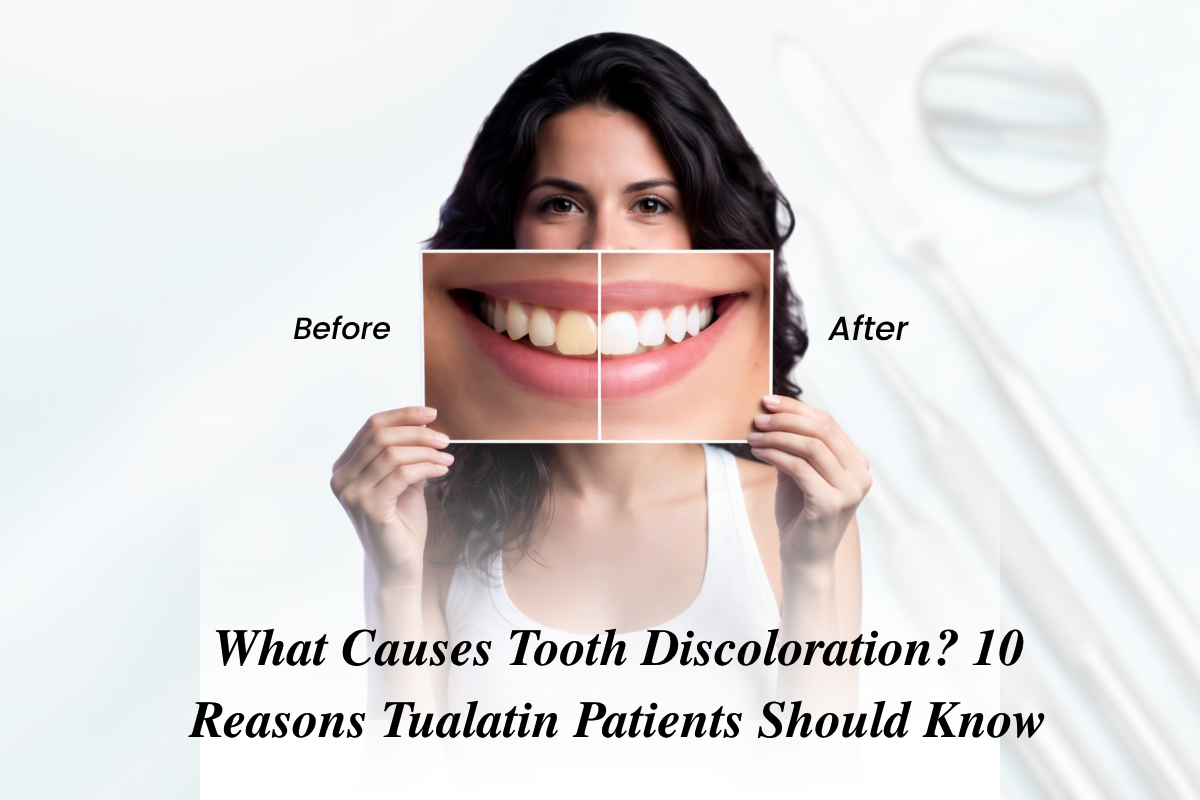
You catch a glimpse of your smile in the mirror… and something feels off. Your teeth don’t look as bright as they used to. Maybe they’ve turned yellow, dull, or even slightly brown. If that sounds familiar, you’re not alone- and you’re not imagining it.
Understanding the causes of tooth discoloration is the first step toward getting your confidence back. Whether it’s daily habits, aging, or hidden dental issues, tooth staining can happen gradually- and often without warning. The good news? Most causes are preventable or treatable with the right care.
What Is Tooth Discoloration and Why Does It Matter?
Tooth discoloration refers to any change in the natural color of your teeth. It can show up as:
- Yellowing
- Brown or dark spots
- Gray or dull tones
- Uneven color patches
This isn’t just about looks. Discolored teeth can sometimes signal underlying problems like enamel damage, decay, or even infection. Ignoring it may lead to bigger oral health concerns down the road. In many cases, treatments like professional teeth whitening can effectively improve the appearance of your smile, but it’s important to first understand the underlying cause before choosing the right solution.
Common Dental Problems Linked to Discoloration
Before we dive into the exact causes, it’s important to understand what discoloration may be connected to:
- Tooth decay (cavities): Dark spots or stains can be early signs
- Gum disease: Can affect how teeth appear and reflect light
- Plaque and tartar buildup: Leads to yellow or brown staining
- Tooth injury: Can cause internal discoloration
If your tooth color has changed suddenly, it’s worth paying attention.
10 Common Causes of Tooth Discoloration
1. Coffee, Tea, and Dark Beverages
Frequent consumption of coffee, tea, red wine, or soda is one of the most common stained teeth causes. These drinks contain pigments that stick to enamel over time.
2. Tobacco Use
Smoking or chewing tobacco can lead to deep yellow or brown stains that are difficult to remove with brushing alone.
3. Poor Oral Hygiene
Skipping brushing or flossing allows plaque and tartar to build up- leading to visible discoloration and dull-looking teeth.
4. Aging
As you age, enamel naturally wears down, exposing the yellowish dentin underneath. This is one of the most unavoidable yellow teeth reasons.
5. Certain Foods
Foods like berries, tomato sauces, and soy sauce can stain teeth, especially if consumed frequently.
6. Medications
Some antibiotics (like tetracycline), antihistamines, and blood pressure medications can cause internal discoloration.
7. Fluorosis
Excess fluoride exposure during childhood can lead to white spots or streaks on teeth.
8. Tooth Injury or Trauma
A hit to the tooth can damage the inner tissue, causing it to darken over time.
9. Enamel Erosion
Acidic foods and drinks weaken enamel, making teeth more prone to staining and discoloration.
10. Dental Restorations
Old fillings, crowns, or bonding materials can discolor or create uneven color over time.
Why Ignoring Tooth Discoloration Can Be Risky
While some discoloration is harmless, others can indicate:
- Early tooth decay
- Infection inside the tooth
- Enamel damage
- Gum disease progression
Waiting too long may turn a simple cosmetic concern into a more complex dental issue.
Quick Solutions You Can Try at Home
If your discoloration is mild, these simple habits can help:
- Brush twice daily with a whitening toothpaste
- Floss regularly to remove plaque buildup
- Rinse your mouth after consuming staining foods or drinks
- Use a straw for dark beverages
- Limit tobacco use
These won’t reverse deep stains- but they can slow further discoloration.
When Should You See a Dentist?
You should consider professional help if:
- Stains don’t go away with brushing
- Teeth appear gray, brown, or uneven
- You notice sudden discoloration in one tooth
- You experience sensitivity or pain
These signs often require more than at-home care.
Professional Solutions That Actually Work
At Lakeside Family & Cosmetic Dentistry, patients in Tualatin and nearby areas like Tigard, Sherwood, and Wilsonville often come in with concerns about stained or yellow teeth.
Depending on the cause, treatment options may include:
- Professional whitening treatments
- Deep cleaning to remove tartar
- Cosmetic dentistry solutions like bonding or veneers
- Addressing underlying dental issues
These approaches are designed to safely restore your natural smile – without damaging your teeth.
If you’re wondering whether professional care is truly worth it compared to over-the-counter options, it’s important to understand the real differences in safety, effectiveness, and long-term results. Many patients in Tualatin are surprised to learn how much stronger and more predictable professional treatments can be.
Take a closer look in our detailed guide on “Professional Teeth Whitening Benefits: Is It Really Better Than Store-Bought Kits in Tualatin?” to make an informed decision before choosing your next step.
Ready to Brighten Your Smile?
If your smile isn’t looking the way you want, don’t wait for it to get worse.
A quick dental evaluation can identify the exact cause of discoloration and guide you toward the right solution.
Call Lakeside Family & Cosmetic Dentistry today to speak with our team or schedule your appointment online– it’s simple, fast, and the first step toward a more confident smile. Taking action now can help you avoid bigger dental problems later.
FAQs: Causes of Tooth Discoloration
What is the most common cause of tooth discoloration?
The most common cause is frequent consumption of staining foods and drinks like coffee, tea, and red wine.
Can yellow teeth become white again?
Yes, depending on the cause. Surface stains can often be improved with professional treatments and better oral care.
Are stained teeth permanent?
Not always. Many stains are removable, but deeper discoloration may require cosmetic dental procedures.
Why is only one tooth discolored?
This could be due to trauma, infection, or nerve damage and should be checked by a dentist.
Do whitening toothpastes really work?
They can help with mild surface stains but are not effective for deep discoloration.
Can medications cause tooth discoloration?
Yes, certain medications can affect tooth color, especially if taken during tooth development.
Is tooth discoloration a sign of poor health?
Sometimes. It can indicate issues like decay, enamel loss, or internal damage.
How can I prevent tooth discoloration?
Maintain good oral hygiene, limit staining foods, and visit your dentist regularly for cleanings.
Final Thoughts
Tooth discoloration is common—but it’s not something you have to live with. Whether it’s caused by everyday habits or hidden dental issues, identifying the root cause is key to finding the right solution.
If you’re in Tualatin or nearby communities, a personalized dental visit can make all the difference. A brighter, healthier smile is closer than you think.