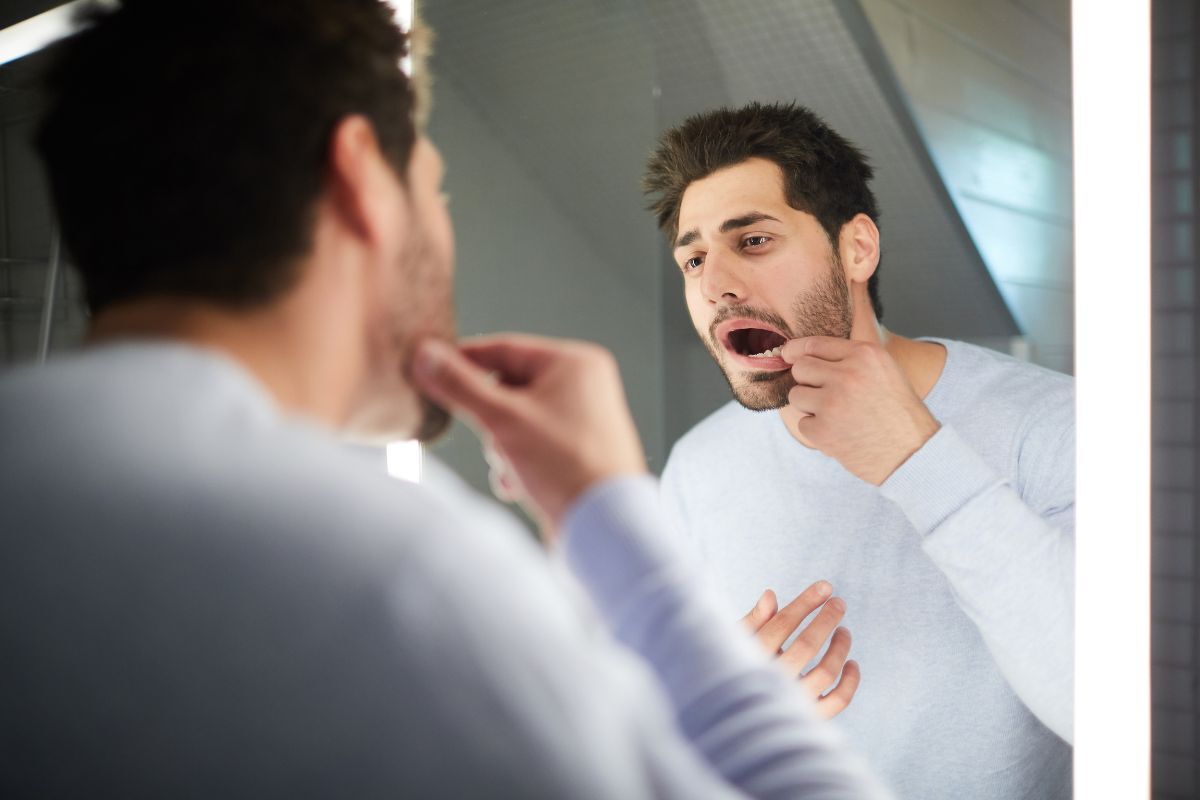
Try this for sixty seconds. Stand at the mirror, stick out your tongue, and lift it toward the roof of your mouth. Now look underneath. Chances are, that’s a part of your own mouth you’ve never actually looked at not once, not ever. And yet it’s one of the first places your dentist checks the moment you sit down in the chair.
Most of us have a mental checklist for our mouths: brush, floss, check for spinach in our teeth, done. But a real oral self examination goes further than a quick glance at your smile. It’s about knowing what a healthy mouth actually looks like in the places you never think to look and that habit alone can catch problems months before they’d ever cause pain.
If you live around Tualatin, Tigard, or Lake Oswego, here’s the good news: you don’t need to become an expert. You just need to know where to look, what’s normal, and when it’s time to let a dental professional take a closer look.
The Blind Spots: What Most People Never Check
Think about the last time you really examined your own mouth. Odds are, you looked at your teeth maybe checked for stains, food stuck between them, or a chipped edge. That’s about where most people stop.
Dentists call the rest of the mouth “soft tissue,” and it’s the part almost nobody checks at home: the floor of the mouth under the tongue, the soft palate at the back of the roof of the mouth, the inner cheeks, the gumline where teeth meet tissue, and the back of the throat. These areas don’t show up when you glance in the mirror while brushing, you have to go looking.
Why This Area Gets Skipped
- No discomfort yet: There’s no pain to prompt a look, early tissue changes rarely hurt, so there’s no built-in warning sign.
- It’s hard to see: It’s awkward to examine lifting the tongue and pulling the cheek out takes a mirror, light, and a bit of practice.
- No baseline: Most people were never taught what “normal” looks like back there, so even if they looked, they wouldn’t know what they’re seeing.
| Did You Know? A routine dental visit includes a full soft-tissue and oral cancer screening checking the tongue, floor of the mouth, cheeks, and throat that takes less than two minutes but is one of the most valuable parts of the appointment. Most patients don’t even realize it’s happening. |
Why It Matters More Than You Think
Skipping the blind spots isn’t just about missing a stray canker sore. A lot of what shapes long-term oral health gum disease, early tooth decay along the gumline, uneven bite alignment, and changes in soft tissue tends to start quietly in areas nobody’s watching.
Gum disease is a good example. It rarely announces itself with pain in the early stages. What it does show is subtle: puffiness, a slightly darker red color, or bleeding when you floss. If you’ve never really looked at your gums, those changes can build for months before you notice anything is different.
The same goes for enamel. Early demineralization the very first stage of tooth decay often shows up as a faint white or chalky patch near the gumline, long before it becomes a cavity you can feel. It’s easy to miss if you’re only checking for obvious dark spots.
Not every dental problem is visible. If you’ve ever wondered why a tooth feels perfectly fine one day but suddenly becomes sensitive the next, read “Why Your Teeth Feel Strong Some Days And Sensitive on Others“ to learn what those changing sensations can mean.
The Risks of Never Looking
Ignoring these areas doesn’t cause harm on its own but it removes your early-warning system. Problems that would have been simple to catch and treat get more time to develop before anyone notices, including you.
- Gum changes: Small gum inflammation can progress toward more significant gum disease if it goes unaddressed for a long stretch.
- Decay progression: Early enamel softening can turn into a cavity that eventually needs a filling or in more advanced cases, a crown.
- Soft tissue changes: Persistent sores, red or white patches, or lumps that go unnoticed for weeks are exactly the kind of changes a professional screening is designed to catch early.
- Bite shifts: An uneven bite can develop gradually and go unnoticed until it starts affecting jaw comfort or wearing down teeth unevenly.
| What Most People Check At Home | What Your Dentist Checks Every Visit |
|---|---|
| Front teeth for stains or food stuck between them | Floor of the mouth, under the tongue, and soft palate |
| Whether breath smells fresh | Gum tissue color, texture, and any bleeding on probing |
| Obvious cavities or chipped teeth | Early enamel changes not yet visible without a mirror and light |
| General “does anything hurt” self-check | Full soft-tissue and oral cancer screening, no pain required |
| Whether the smile looks even | Bite alignment and how the jaw meets when you close down |
The Professional Solution: How a Real Healthy Mouth Check Works
You don’t need dental training to do a basic oral self examination at home you just need a mirror, good light, and two minutes once a month. Here’s the simple version dental teams often recommend to patients:
- Start with your gums: Look at your gums first, they should be a consistent pink, not puffy, dark red, or bleeding when you floss.
- Check your cheeks: Pull your cheek out gently and check the inside, it should look smooth and pale pink, without white patches or sores that haven’t healed.
- Lift your tongue: Lift your tongue and look underneath, then check the sides and top – note any patches, lumps, or areas that look different from the surrounding tissue.
- Scan the roof and throat: Open wide and look at the roof of your mouth and the very back- this is the area people check least often.
- Give it two weeks: A sore, patch, or color change that’s still there after two weeks is worth having a professional take a look.
That home check is a good habit but it’s not a replacement for a professional exam. A dentist or hygienist is trained to spot subtle changes in tissue color, texture, and pattern that are easy for an untrained eye to miss, and they’ll check things you simply can’t see on yourself, like the back of your own throat or the underside of your bite.
Local Authority: Trusted Care in Tualatin
Lakeside Family & Cosmetic Dentistry has been part of the Tualatin community since 1986 — starting as a small, two-chair office and growing into a full-service practice at the Tualatin Commons. Families from Tualatin, Tigard, Lake Oswego, Lake Grove, West Linn, Sherwood, and the greater Portland metro area have relied on the same practice for routine exams, cleanings, and the kind of soft-tissue screening that catches problems early.
Every comprehensive exam at Lakeside includes a full check of the areas most patients never think to look at themselves — gums, cheeks, tongue, floor of the mouth, and throat alongside a review of bite alignment and enamel health. It’s a habit built into every visit, not an add-on.
⭐⭐⭐⭐⭐ Carolyn W
Lakeside Dental is amazing! I’ve been a patient for a number of years and have always received the best care. Everyone in the practice is professional and cares about the patients. Highly recommend!
Building the Habit: A Few Reminders
- Make it monthly: Pick a day each month – right after your calendar reminder for something else, like paying rent, works well.
- Keep it simple: A bathroom mirror and your phone flashlight are all you need – no special tools required.
- Track changes: Write down or photograph anything unusual so you can describe exactly what changed at your next visit.
- Don’t self-diagnose: A self-check is a habit, not a diagnosis – anything that concerns you deserves a professional look, not a guess.
A monthly self-check helps you notice changes early, but it can’t tell you how urgent a problem is. If you’re unsure whether a sore, sensitivity, or toothache needs immediate attention, our guide “Is That Tooth Pain a Warning Sign? How Dentists Really Decide When Treatment Can’t Wait“ explains the signs dental professionals look for.
Frequently Asked Questions
1. What is an oral self examination and why does it matter?
An oral self examination is a quick, at-home check of your teeth, gums, tongue, cheeks, and the floor of your mouth for anything that looks different than usual. It matters because many early oral health changes, like mild gum inflammation or a soft-tissue spot, don’t cause pain and are easy to miss unless you’re actually looking.
2. How often should I do a healthy mouth check at home?
Once a month is a reasonable habit for most adults. It’s frequent enough to notice changes early without becoming something you overthink day to day.
3. What parts of the mouth do dentists check that people usually skip at home?
The floor of the mouth under the tongue, the soft palate, the inner cheeks, and the back of the throat are the areas checked at every professional visit but rarely examined by patients on their own.
4. Can you tell if you have early gum disease just by looking in the mirror?
Sometimes. Puffiness, a darker red color, or bleeding when you floss can be early signs. But gum disease can also progress with very subtle visual changes, which is why a professional check with a periodontal exam is more reliable than a mirror alone.
5. What does a healthy mouth actually look like?
In general, healthy gums are a consistent pink and don’t bleed with normal brushing or flossing, soft tissue is smooth without unexplained patches or sores, breath is generally fresh, and teeth don’t have visible chalky or dark spots along the gumline.
6. What happens during a soft tissue exam at the dentist?
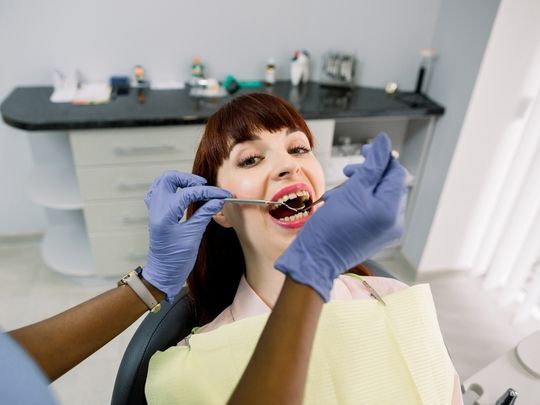
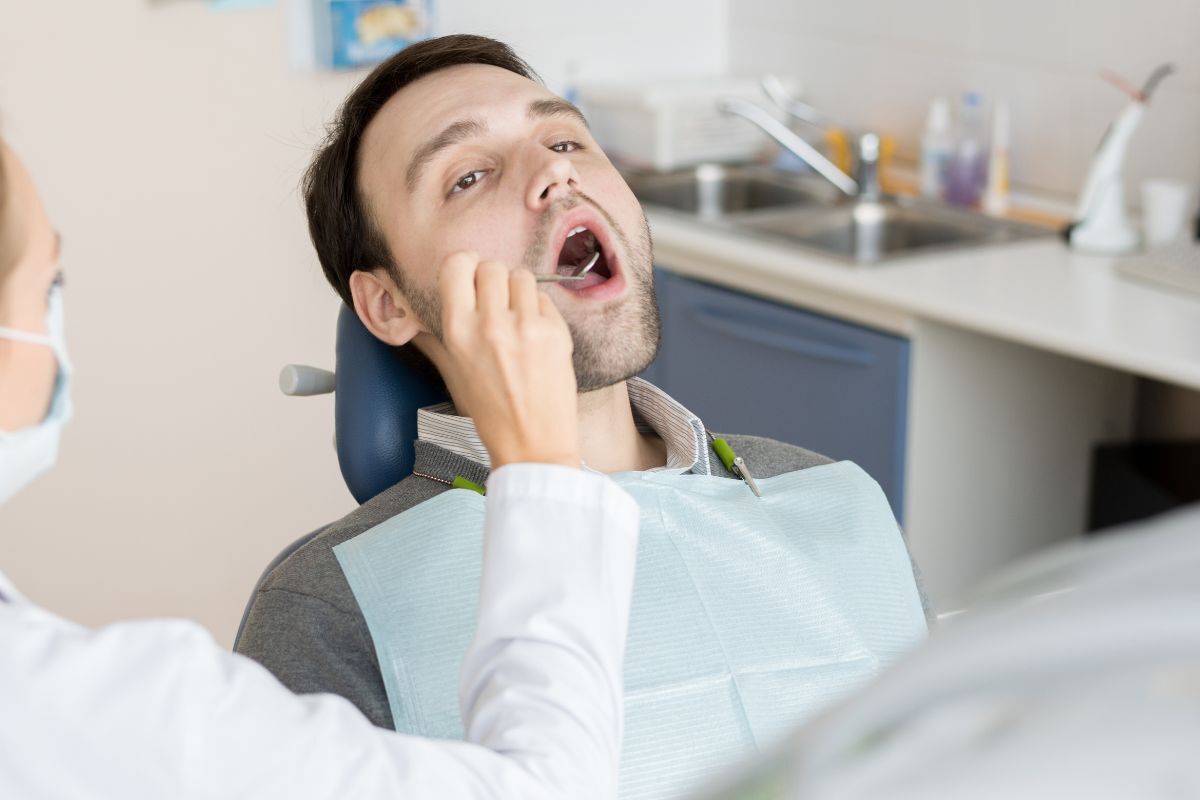
A dentist or hygienist visually and sometimes manually checks the tongue, cheeks, floor of the mouth, palate, and throat for any unusual texture, color, or growths. It’s quick, painless, and typically included in a routine cleaning or checkup.
7. Are white or red patches in the mouth always something serious?
Not always—many are harmless and related to minor irritation. But because it’s hard to tell the difference without training, any patch, sore, or lump that hasn’t healed within about two weeks should be checked by a dental professional.
8. How is an oral self exam different from a professional dental checkup?
A self exam is a general awareness check you can do at home with a mirror. A professional checkup adds trained eyes, proper lighting and tools, X-rays when needed, and the experience to recognize subtle changes that are easy to miss on your own. The two work best together, not as substitutes for each other.