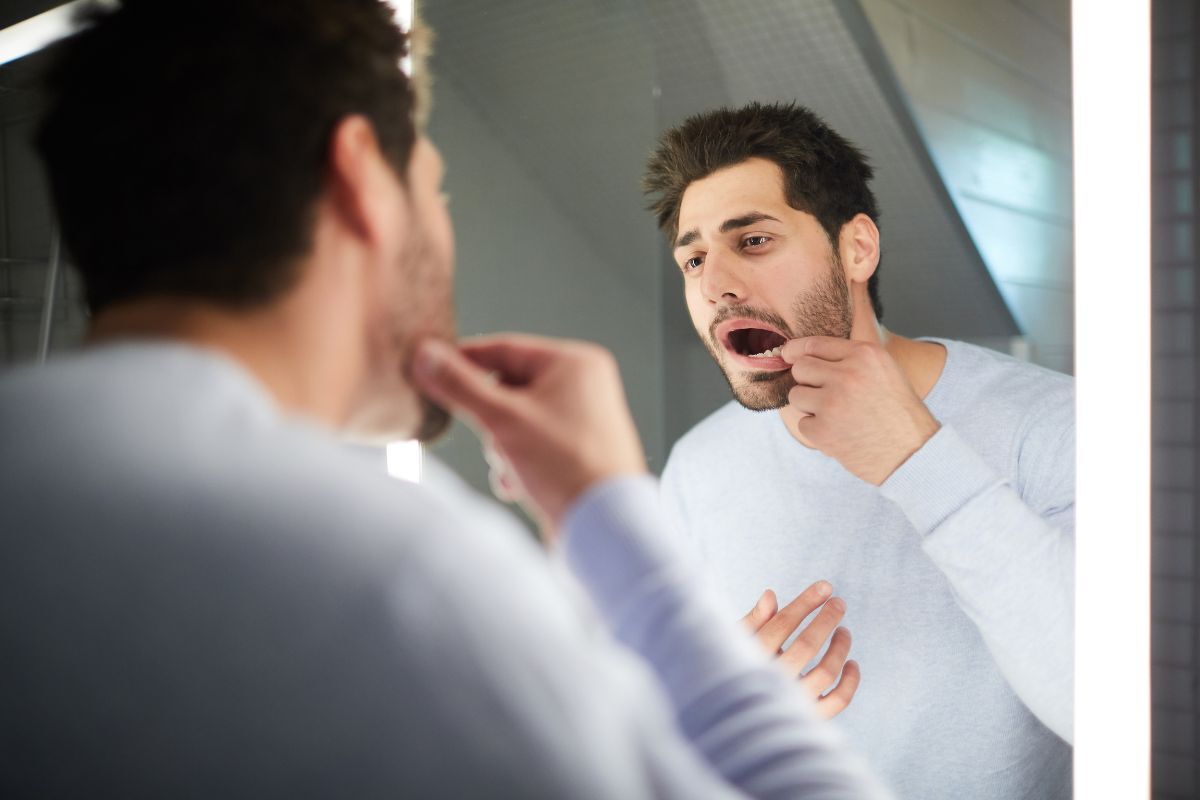
You’re halfway through dinner with friends when it happens again – that same nagging feeling, right in the same spot between two teeth. You run your tongue over it, try to discreetly work it loose, and wonder why it’s always that exact spot. If this sounds familiar, you’re not imagining a pattern.
For many patients we see at our Tualatin dental office, food stuck between teeth in the same place, meal after meal, isn’t just bad luck. It’s usually a sign that something has changed in the shape or spacing of your smile, and it’s worth understanding why before it turns into a bigger problem.
When Food Keeps Finding the Same Gap
Teeth are supposed to sit against each other at a snug “contact point.” That tight seal is what normally keeps food from wedging its way between them while you chew. When that seal loosens, even slightly, food finds the opening every single time you eat.
The tricky part is that this kind of change rarely happens all at once. A contact point can wear down gradually, a filling can settle, or gum tissue can recede so slowly that you don’t notice until flossing in that one area suddenly feels different than it used to.
Common Reasons Food Traps in the Same Spot
- Shifting teeth: Teeth move slightly throughout life, and small gaps can open between them, especially after orthodontic treatment without a retainer.
- Gum recession: When gum tissue pulls back, the small triangular space below the contact point becomes visible and starts catching food.
- Worn or aging dental work: Older fillings and crowns can lose their tight seal against the neighboring tooth over time.
- Tooth wear or decay: A cavity forming between two teeth can change the contact point long before it causes noticeable pain.
- Bite alignment changes: Shifts in how your teeth meet can put uneven pressure on certain teeth, gradually opening small spaces.
Why It Matters More Than It Seems
It’s easy to treat a food trap as a minor annoyance — something to deal with at the table and forget about. But a gap that consistently catches food is also a gap where bacteria and plaque can sit for hours between brushings.
Over time, that trapped debris can irritate the gum tissue right at the point of contact, which is often where early gum disease and localized decay begin. In other words, the annoyance itself is usually a small early warning, not the actual problem.
A food trap may be one of those small changes that’s easy to dismiss. If you’ve noticed other subtle changes in your teeth or smile, you may also find it helpful to understand which seemingly minor changes deserve closer attention.
| Did You Know? A gap that traps food doesn’t have to be visible to be a problem. Many patients only discover gum recession or a widening space during a routine dental exam, well before it’s noticeable in the mirror. |
What Happens If a Food Trap Is Ignored
Most patients don’t come in because of the food trap itself — they come in months later because of what it led to. Left alone, a consistently trapped area tends to follow a predictable pattern.
- Gum inflammation: Ongoing irritation at the contact point can develop into gingivitis in that specific area.
- Bad breath from one area: Trapped food that isn’t fully removed by brushing can cause localized odor that toothpaste doesn’t fix.
- Tooth decay between teeth: Cavities that form between teeth are harder to see and often grow before they’re caught.
- Gum recession getting worse: Untreated inflammation can accelerate the very recession that opened the space in the first place.
- Bone support changes: In more advanced cases, ongoing gum disease around one tooth can begin to affect the bone that anchors it.
How a Dentist Actually Diagnoses the Cause
Because so many different issues can cause the same symptom, figuring out why food keeps getting stuck between the same teeth really does call for a professional look, not guesswork at home.
What your dentist sees during an exam can reveal changes that are easy to miss at home. In fact, there are areas of your mouth that most patients rarely think to check but that dentists routinely examine for early signs of trouble.
What to Expect During Your Visit
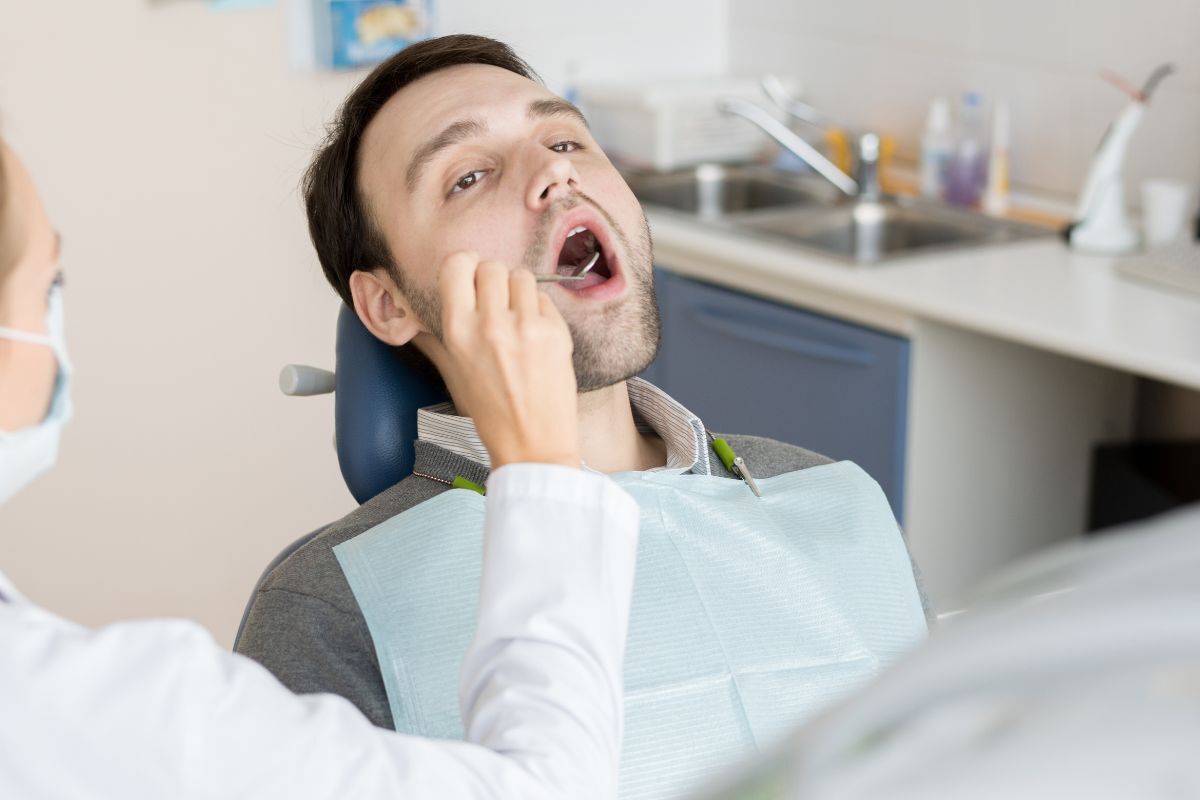
A dental exam for this concern typically starts with a close visual check of the contact point in question, along with bitewing X-rays to see below the gumline and between the teeth, where recession, decay, and bone changes aren’t visible to the eye.
From there, treatment depends entirely on the cause. A worn filling may simply need to be replaced or reshaped. Early gum recession might call for a focused cleaning and a closer monitoring schedule. A genuine gap from tooth movement may be a conversation about cosmetic bonding, contouring, or orthodontic options, depending on what fits your smile and your goals.
Symptom-to-Cause Quick Reference
Here’s a general guide to what a trapped-food pattern can mean. This isn’t a substitute for an exam, but it’s a helpful starting point for the conversation with your dentist.
| What You Notice | Possible Cause | What It Usually Means |
|---|---|---|
| Food traps in the same spot every meal | A small gap or slightly worn contact between two teeth | The teeth have shifted or the space between them has widened over time |
| A triangle-shaped dark gap near the gumline | Gum recession exposing the space below the natural contact point | Gum tissue has pulled back, often called a “black triangle” |
| Sharp catch when flossing one specific area | A worn, chipped, or aging filling or crown edge | Older dental work may no longer seal the space tightly |
| New food-trapping after orthodontic treatment | Minor tooth movement (relapse) after braces or clear aligners | Teeth can shift slightly over the years without a retainer |
| Pressure or soreness along with the trapped food | Early gum disease or bone loss around that tooth | Inflammation can change the shape of the gum and bone support |
A Tualatin Practice That’s Seen This Pattern Before
Lakeside Family & Cosmetic Dentistry has been part of the Tualatin community since 1986, when Dr. Rick Evans opened a small upstairs practice down the street from where the office sits today. What started as a one-room operation has grown into a full 7-operatory office in the Tualatin Commons, now with Dr. Travis Evans working alongside his father to care for families throughout the area.
Patients travel to our Tualatin-Sherwood Road office from Tigard, Lake Oswego, Lake Grove, Wilsonville, West Linn, Sherwood, Beaverton, and Southwest Portland, often because a food-trapping spot they’d been ignoring turned out to be an early sign of gum recession or a worn restoration that was easy to catch — and easy to fix — once someone actually looked.
⭐⭐⭐⭐⭐ Jookles McJunkin
Dr. Amanda and her staff are the best dental team my family and I have experienced. Their approach is friendly, gentle, and patient-friendly. My children (12 and 14) always mention how much they enjoy seeing Dr. Amanda and her staff – surprising, coming from a couple kids!! Her assistant, Megan, is great as well – friendly and attentive. Billing is handled by their front desk clearly and efficiently. I recommend Dr. Amanda and Lakeside Dentistry to my friends & family without hesitation.
| Stop Guessing Why It Keeps Happening A quick exam can tell you exactly what’s causing the food trap — and whether it needs attention now or can simply be monitored. REQUEST AN APPOINTMENT! |
What You Can Do Before Your Next Visit
- Floss the same spot daily: Note whether it catches, tears, or shreds — that detail helps your dentist narrow down the cause.
- Watch for bleeding: Gum bleeding limited to one area often points toward localized inflammation or recession.
- Track when it started: Did it begin after orthodontic treatment, a new filling, or seemingly out of nowhere? Timing is a useful clue.
- Avoid forcing objects into the gap: Toothpicks and sharp tools can widen the space or damage the gum tissue further.
- Don’t wait for pain: Most of the causes behind a food trap don’t hurt until they’ve progressed — an exam catches it earlier.
Frequently Asked Questions
1. Why does food only get stuck between two specific teeth?
It usually means the contact point between those two teeth has changed — either from a small gap opening up, gum recession exposing the space below the contact, or a filling or crown that no longer seals as tightly as it once did.
2. Is it normal for food to get stuck between teeth every day?
Occasional food-trapping after certain meals is common, but the same spot catching food after nearly every meal usually points to a specific cause worth having a dentist check, rather than something to simply live with.
3. Can gum recession cause food to get stuck between teeth?
Yes. As gum tissue recedes, it can expose a small triangular space below the natural contact point of two teeth, sometimes called a “black triangle,” which is a common spot for food to catch.
4. Do gaps between teeth get worse over time?
They can, especially if the underlying cause — such as gum recession, bite changes, or minor tooth movement — isn’t addressed. Regular checkups help track whether a gap is stable or changing.
5. Will flossing fix a food trap between teeth?
Flossing helps clear the debris in the moment, but it doesn’t correct the underlying gap, recession, or worn dental work causing the food to catch there in the first place.
6. Can a filling or crown cause food to get stuck between teeth?
Yes. Older fillings and crowns can wear down or shift slightly at the edges over the years, which can open a small space along the contact point with the neighboring tooth.
7. Should I be worried if food gets stuck between my teeth after braces?
Minor tooth movement after orthodontic treatment is common, especially without consistent retainer wear. It’s worth mentioning at your next dental visit so your dentist can check whether the spacing has changed.
8. When should I see a dentist about food constantly getting stuck between my teeth?
If the same spot has been trapping food for more than a few weeks, or if you notice bleeding, soreness, or a visible gap, it’s a good time to schedule an exam rather than waiting for discomfort to develop.